
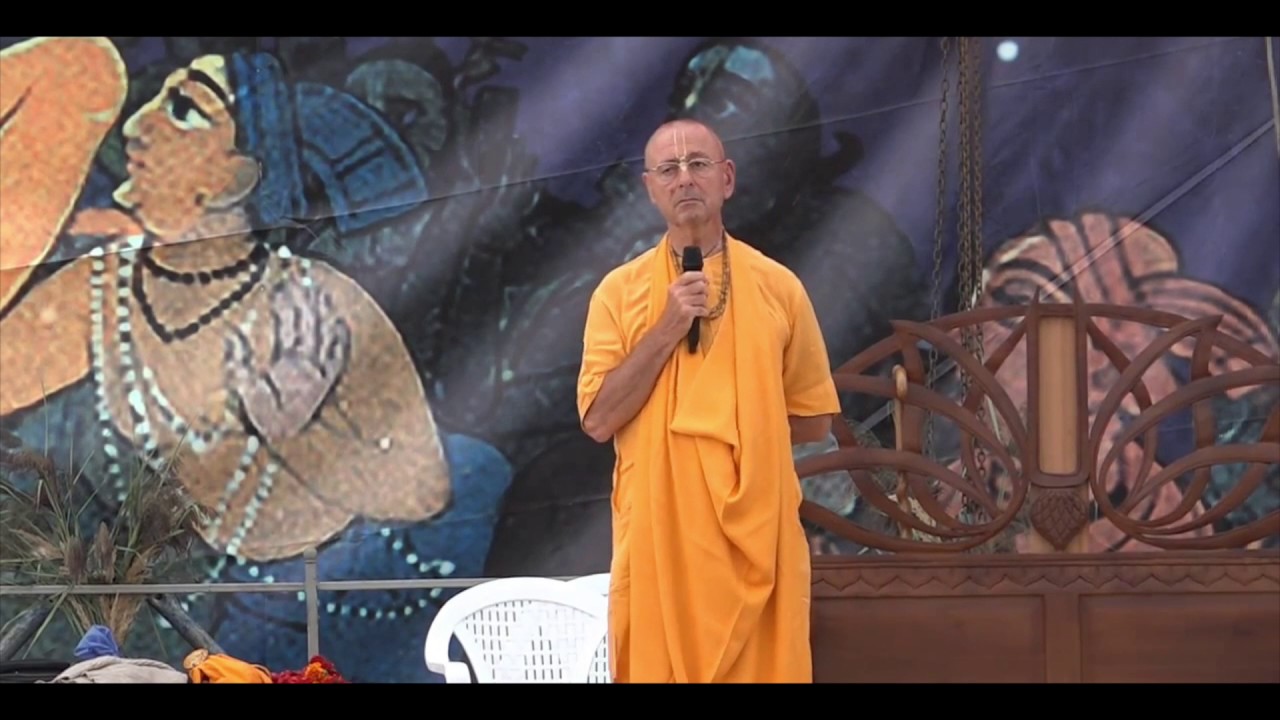
Reading of Śrīmad-Bhāgavatam 6.11.14–17
00:00 Vṛtrāsura Confronts Indra over Viśvarūpa’s Death
01:32 Viśvarūpa as Brāhmaṇa, Guru, and Brother
02:37 Vṛtrāsura’s Transcendental Consciousness and His Role as a Warrior
03:38 The Stone-Like Heart and Offences to the Holy Name
04:25 Why Vaiṣṇavas Should Avoid Excessive Austerities
05:01 Vṛtrāsura Condemns Indra for Killing His Spiritual Master
05:51 Why the Activities of Demigods Cannot Be Judged by Ordinary Standards
07:44 Why Ordinary People Should Not Imitate the Īśvaras
09:38 Practices Forbidden in Kali-yuga
10:13 Śrīla Prabhupāda on Sannyāsa Qualifications and Spiritual Leadership
11:49 The Prohibition of Niyoga in Kali-yuga
12:16 Indra’s Attachment to His Heavenly Kingdom
12:58 “I” and “Mine”: The Root of Material Attachment
15:18 Vṛtrāsura Condemns Indra’s Loss of Good Qualities
16:12 Shame, Repentance, and the Duty to Apologise
18:02 Mercy and Indra’s Treatment of Viśvarūpa
18:56 How Good Conduct Brings Glory
19:58 How Irreligious Activities Destroy Good Qualities
21:37 Why Vṛtrāsura Says Even Fire Will Reject Indra’s Body
22:50 Vṛtrāsura Threatens Indra and the Other Demigods
23:23 Cruelty, Passion, and the Desire for Sense Gratification
24:39 Sacrifices to Bhairava and Other Deities
25:39 Sacrifices in the Three Modes of Nature and Transcendence
26:29 How Intention Determines the Nature of a Sacrifice
26:47 Śrīla Prabhupāda’s Commentaries and the Introduction to Vṛtrāsura’s Prayers
28:03 Vṛtrāsura’s Chivalry and His Efforts to Provoke Indra
29:04 How Incorrect Mantra Pronunciation Changed the Sacrifice’s Result
29:41 The Difference Between Vedic Sacrifices and Chanting the Hare Kṛṣṇa Mantra
30:55 Lord Caitanya’s Teaching on the Freedom to Chant the Holy Name